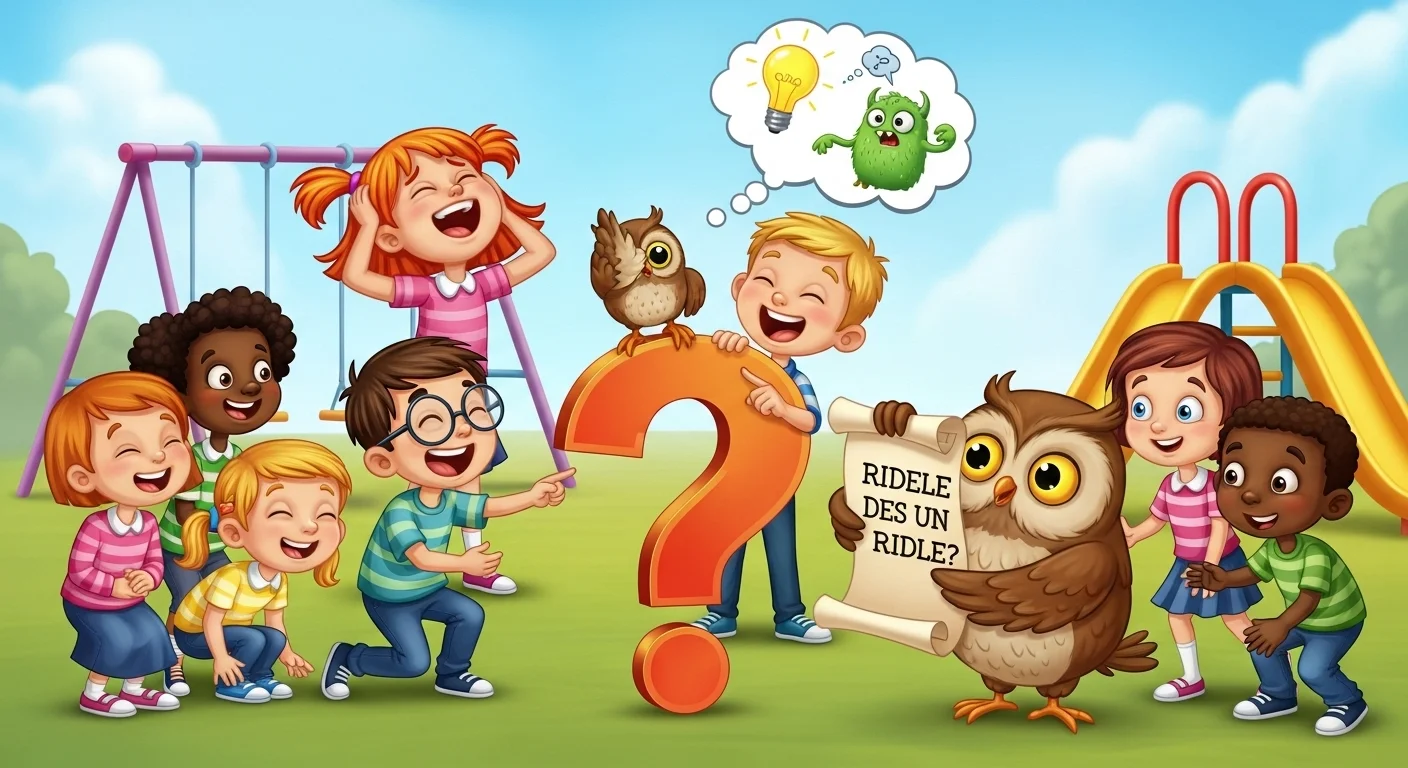
Thinking riddles for kids are a fun and powerful way to challenge young minds and build essential cognitive skills. These riddles encourage children to think outside the box, use logic, and approach problems from different angles. Instead of simple questions, they require careful thought, making them both entertaining and educational. Perfect for use at home, in classrooms, or during group activities, thinking riddles help kids develop problem-solving abilities, improve concentration, and boost creativity. Whether easy or a bit tricky, these riddles keep children engaged while turning learning into an exciting game. Get ready to explore a collection of fun thinking riddles that will make kids think, laugh, and learn at the same time! π€β¨
π‘ Did You Know?
Riddles help children improve critical thinking, memory, and attention to detail.
Kids who solve riddles regularly often develop stronger problem-solving skills in other subjects too.
π Riddle of the Day
I go up but never come down
I show your age without a frown
I grow each year with every birthday

π§ Thinking Riddles for Kids with Answers
- I have keys but no locks, space but no room. You can enter, but you canβt go outside. What am I?
Answer: A keyboard - What has to be broken before you can use it?
Answer: An egg - I fly without wings and cry without eyes. What am I?
Answer: A cloud - What gets bigger the more you take away?
Answer: A hole - I am always in front of you but canβt be seen. What am I?
Answer: The future - What can fill a room but takes up no space?
Answer: Light - What has many teeth but canβt bite?
Answer: A comb - The more you take, the more you leave behind. What am I?
Answer: Footsteps - What has hands but cannot clap?
Answer: A clock - What can you catch but not throw?
Answer: A cold
π― 100 Easy Riddles with Answers
- What color is the sky on a clear day?
Answer: Blue - What do bees make?
Answer: Honey - What has four legs and barks?
Answer: A dog - What do you use to write?
Answer: A pen or pencil - What do cows drink?
Answer: Water - What shines at night in the sky?
Answer: The moon - What do you wear on your feet?
Answer: Shoes - What do you eat for breakfast sometimes?
Answer: Eggs - What do you call frozen water?
Answer: Ice - What do plants need to grow?
Answer: Water and sunlight
π Thinking Riddles for Kids PDF
- What has a face and two hands but no arms or legs?
Answer: A clock - What goes up but never comes down?
Answer: Your age - What has one eye but canβt see?
Answer: A needle - What can travel around the world while staying in one spot?
Answer: A stamp - What has a neck but no head?
Answer: A bottle - What gets wetter the more it dries?
Answer: A towel - What has a heart that doesnβt beat?
Answer: An artichoke - What has ears but cannot hear?
Answer: Corn - What has a ring but no finger?
Answer: A phone - What begins with T, ends with T, and has T in it?
Answer: A teapot
β Riddles for Kids with Answers
- What is black and white and read all over?
Answer: A newspaper - What has wings but cannot fly?
Answer: A penguin - What has a thumb and four fingers but is not alive?
Answer: A glove - What has a bed but never sleeps?
Answer: A river - What kind of band never plays music?
Answer: A rubber band - What begins with an E but only has one letter in it?
Answer: An envelope - What kind of coat is always wet when you put it on?
Answer: A coat of paint - What has a tail but no body?
Answer: A coin - What has cities but no houses?
Answer: A map - What can you hold without touching it?
Answer: Your breath

π€― Tricky Riddles for Kids
- What can run but never walks, has a mouth but never talks?
Answer: A river - What has an eye but cannot see?
Answer: A needle - What is so fragile that saying its name breaks it?
Answer: Silence - What begins with P, ends with E, and has thousands of letters?
Answer: A post office - What gets sharper the more you use it?
Answer: Your brain - What has many keys but canβt open a single lock?
Answer: A piano - What has legs but doesnβt walk?
Answer: A table - What comes once in a minute, twice in a moment, but never in a thousand years?
Answer: The letter βMβ - What can you break even if you never pick it up?
Answer: A promise - What is always running but never moves?
Answer: Time
π§© Tricky Riddles with Answers
- What has one head, one foot, and four legs?
Answer: A bed - What comes down but never goes up?
Answer: Rain - What has a face but no eyes, nose, or mouth?
Answer: A clock - What can fill a room but takes no space?
Answer: Light - What has an end but no beginning?
Answer: A stick - What can you catch but not see?
Answer: A cold - What has a spine but no bones?
Answer: A book - What has a hole but still holds water?
Answer: A sponge - What gets bigger the more you take away?
Answer: A hole - What is always in front of you but canβt be seen?
Answer: The future
πΎ Animal Thinking Riddles
I hop and have long ears, I love carrots too π Rabbit
I roar in the jungle but sleep in the day π Lion
I fly at night and use sound to see π Bat
I have a trunk but Iβm not a car π Elephant
I waddle and quack near water π Duck
I climb trees and eat bananas π Monkey
I swim and have a slippery body π Fish
I have black and white stripes, I live on grasslands π Zebra

π School and thinking riddles for kids Riddles
I have pages but Iβm not a tree, I teach you things you need to see π Book
I write on paper but never speak, I help you learn every week π Pencil
I erase mistakes without a sound, I fix your work safe and round π Eraser
I hold papers and homework too, I carry your supplies to school π Backpack
I show answers big and bright, students watch me day and night π Board
I sharpen pencils to a point, I make writing neat and joint π Sharpener
I keep papers safe in one place, neat and tidy in every case π Folder
I tell the time in every class, I tick and tock as minutes pass π Clock
π‘ Everyday Thinking Riddles
I have a face but no eyes, I tell you time when it flies π Clock
I go around the house but never leave, I hold your meals and snacks to retrieve π Fridge
I open and close to let you in, I keep your home safe within π Door
I cover the floor under your feet, soft and warm, a comfy seat π Rug
I hold water for brushing teeth, washing hands, or cleaning beneath π Sink
I light up a room at night, so you can see without fright π Lamp
I have pages, pictures, and more, I take you on adventures galore π Magazine
I spin and clean clothes in a whirl, keeping them fresh in a twirl π Washing Machine
π§© Brain and Logic Riddles
What has hands but cannot clap? π Clock
What has keys but cannot open doors? π Piano
What has a face and two hands but no arms? π Clock
What gets wetter as it dries? π Towel
What has a neck but no head? π Bottle
What comes down but never goes up? π Rain
What can travel around the world while staying in one place? π Stamp
What has one eye but cannot see? π Needle

π thinking riddles for kids Riddles
I can fly without wings, I cry without eyes, I move but cannot walk π Cloud
I have cities but no houses, forests but no trees, rivers but no water π Map
Iβm tall when young and short when old, I give light without a mold π Candle
Iβm full of holes but hold water too π Sponge
I can be cracked, told, and played, I make you think in a clever way π Joke
Iβm often round and sometimes square, you can bounce me here and there π Ball
I go up when rain comes down, I bring colors to the town π Rainbow
I live in the night sky and twinkle so high π Star
β FAQs
What are thinking riddles for kids?
Thinking riddles are short, fun questions designed to make kids use logic, observation, and creativity. thinking riddles for kids.
Why are riddles good for children?
They improve problem-solving, memory, focus, and creative thinking while keeping learning playful. thinking riddles for kids.
Can teachers use riddles in the classroom?
Yes! They work for warm-ups, brain breaks, group games, and reinforcing lessons. thinking riddles for kids.
Are thinking riddles suitable for all ages?
Absolutely. They can be simplified for young kids or made slightly trickier for older children. thinking riddles for kids.
How often should kids do riddles?
Even a few riddles a day can boost thinking skills and curiosity, especially during free time or school breaks. thinking riddles for kids.
π Conclusion
Thinking riddles for kids thinking riddles for kids turn everyday curiosity into playful learning. They thinking riddles for kids thinking riddles for kids challenge young minds,thinking riddles for thinking riddles for kids kids spark βahaβ moments, and inspire imagination. Whether used in the thinking riddles for kids classroom, at home, or on the go, these