
💡 Did You Know?
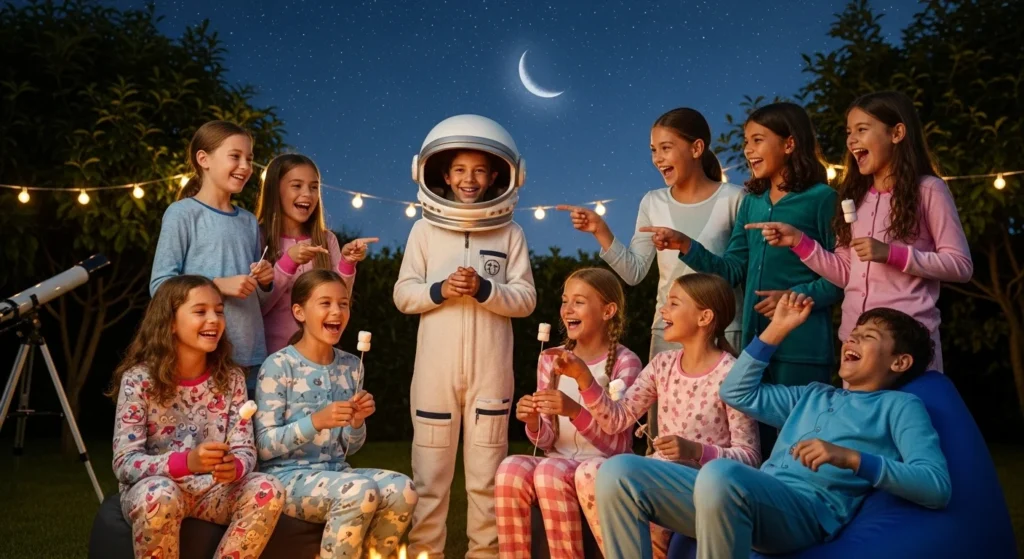
Learning astronomy through riddles helps kids improve logical thinking and memory while having fun.
Asking questions about space builds early interest in science, technology, and exploration.
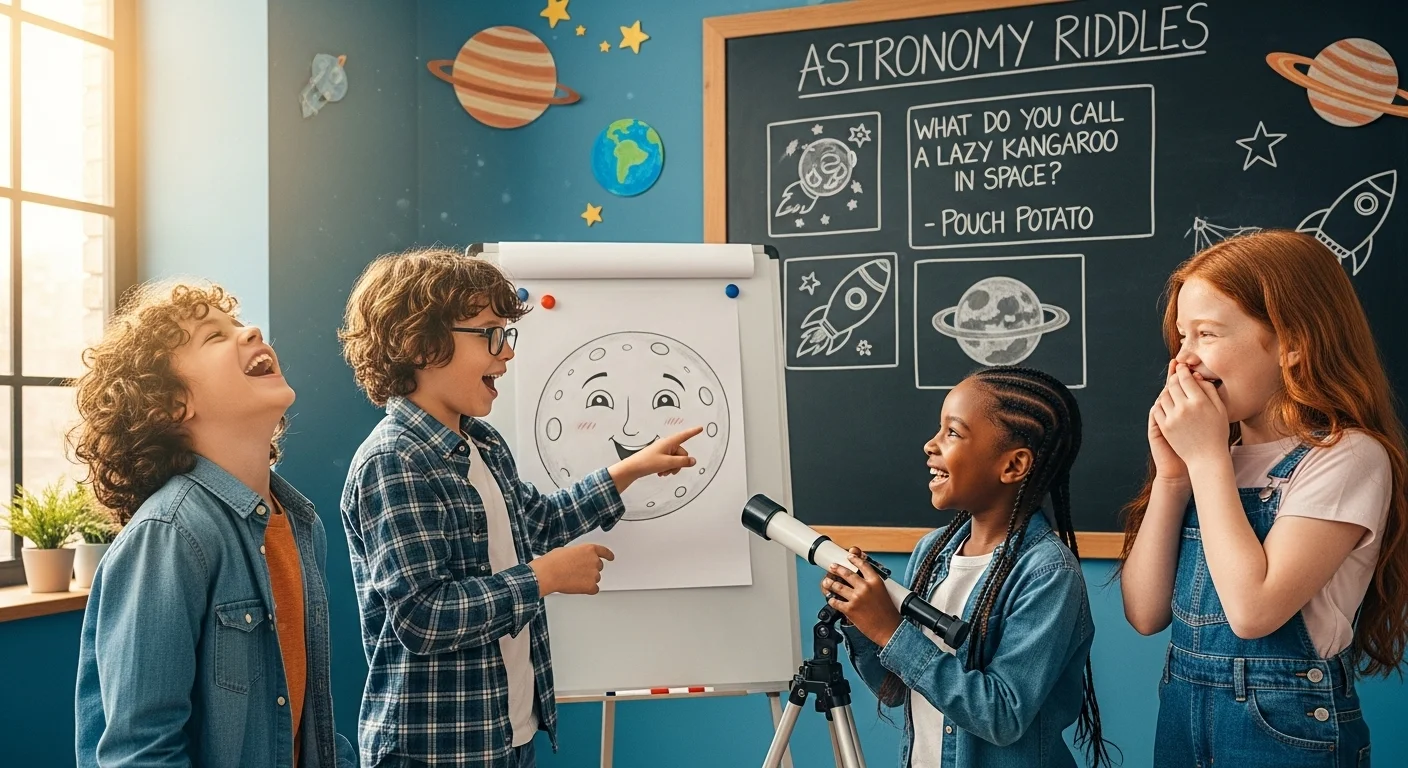
🎯 Astronomy riddles kids of the Day (UNANSWERED)
I sparkle far but I’m not near,
I shine each night but disappear,
I’m born in clouds of cosmic dust.
Can you guess the answer? Comment below!
🌞 Sun & Light Astronomy Riddles
I light the planets every day 👉 Sun
I’m a star at the center of it all 👉 Sun
I rise and set to mark time 👉 Sun
I give warmth without touching 👉 Sun
I make shadows on the ground 👉 Sun
🌍 Earth & Sky Observation Riddles
I’m the planet where kids learn 👉 Earth
I spin to make night and day 👉 Earth
I have clouds land and seas 👉 Earth
I watch the stars from my ground 👉 Earth
I travel space around one star 👉 Earth
🌕 Moon & Night Sky Riddles
I glow softly in the dark 👉 Moon
I change shape through the month 👉 Moon
I cause tides in the sea 👉 Moon
I follow Earth as it moves 👉 Moon
I shine but make no light 👉 Moon
⭐ Stars & Constellation Riddles
I twinkle but I’m very hot 👉 Star
I group stars into pictures 👉 Constellation
I guide travelers at night 👉 North Star
I burn fuel deep inside 👉 Star
I look small but I’m huge 👉 Star
🪐 Planet Astronomy Riddles
I travel around a star 👉 Planet
I’m round and shaped by gravity 👉 Planet
I don’t make my own light 👉 Planet
I can be rocky or gassy 👉 Planet
I follow a curved path 👉 Planet
🔴 Mars & Nearby Worlds Riddles
I’m the red planet kids love 👉 Mars
I may have had water before 👉 Mars
I’m dusty cold and rocky 👉 Mars
Robots roll across my land 👉 Mars
I’m a goal for explorers 👉 Mars
🌪️ Giant Planets Astronomy Riddles
I’m the biggest planet of all 👉 Jupiter
I have a storm bigger than Earth 👉 Jupiter
I’m wrapped in colorful clouds 👉 Jupiter
I have many moons nearby 👉 Jupiter
I’m made mostly of gas 👉 Jupiter
💍 Ringed Planet Space Riddles
I wear shining rings 👉 Saturn
My rings are ice and stone 👉 Saturn
I spin very fast 👉 Saturn
I’m light for my size 👉 Saturn
I amaze kids through telescopes 👉 Saturn
❄️ Distant Ice Giant Riddles
I spin on my side 👉 Uranus
I’m pale blue and cold 👉 Uranus
I tilt more than others 👉 Uranus
I have thin rings 👉 Uranus
I orbit far from the sun 👉 Uranus
🌊 Far Blue Planet Riddles
I’m deep blue and windy 👉 Neptune
I’m the farthest known planet 👉 Neptune
I have huge storms 👉 Neptune
I’m very cold and dark 👉 Neptune
I was found using math 👉 Neptune
☄️ Space Rocks & Objects Riddles
I fly through space as ice 👉 Comet
I leave a glowing tail 👉 Comet
I’m a rocky space traveler 👉 Asteroid
I burn bright in the sky 👉 Meteor
I land on Earth from space 👉 Meteorite
🌌 Galaxies & Deep Space Riddles
I hold billions of stars 👉 Galaxy
I spin slowly in space 👉 Galaxy
I’m shaped like a spiral 👉 Milky Way
I’m our home galaxy 👉 Milky Way
I stretch farther than eyes see 👉 Universe
🕳️ Mysterious Space Riddles
I pull light inside me 👉 Black hole
I form when stars collapse 👉 Black hole
I cannot be seen directly 👉 Black hole
I bend space around me 👉 Black hole
I am strong and silent 👉 Black hole
🔭 Astronomy Tools & Science Riddles
I help kids see far stars 👉 Telescope
I watch space from Earth 👉 Observatory
I collect space pictures 👉 Satellite
I explore planets alone 👉 Space probe
I study stars and planets 👉 Astronomy
🧑🚀 Space Explorer Riddles
I travel beyond Earth 👉 Astronaut
I float in zero gravity 👉 Astronaut
I wear a special suit 👉 Astronaut
I study space up close 👉 Astronaut
I return home in capsules 👉 Astronaut