
🔢 Pattern Riddles for Kids with Answers
- What comes next in the sequence: 2, 4, 6, 8, …?
Answer: 10 - I am a number that comes after 1, 3, 5, 7. What am I?
Answer: 9 - Complete the pattern: A, B, C, D, …
Answer: E - I start at 0 and increase by 2 each time. The numbers go: 0, 2, 4, 6, … What comes next?
Answer: 8 - Fill in the missing number: 5, 10, 15, ?, 25
Answer: 20 - Which comes next: red, blue, red, blue, …?
Answer: Red - Continue the sequence: ♣, ♥, ♣, ♥, …
Answer: ♣ - What comes next in this pattern: 1, 4, 9, 16, …?
Answer: 25 - Fill in the blank: 2, 4, 8, 16, …
Answer: 32 - Complete the letter pattern: M, T, W, T, F, …
Answer: S
🎯 100 Easy Riddles with Answers (Top 10 Sample)
- What has a face and two hands but no arms or legs?
Answer: A clock - What has keys but can’t open locks?
Answer: A piano - What gets wetter the more it dries?
Answer: A towel - I have a neck but no head. What am I?
Answer: A bottle - What has one eye but cannot see?
Answer: A needle - What has legs but doesn’t walk?
Answer: A table - What can you catch but not throw?
Answer: A cold - What goes up but never comes down?
Answer: Your age - What is full of holes but still holds water?
Answer: A sponge - What begins with T, ends with T, and has T in it?
Answer: A teapot
📚 1000 Riddles with Answers (Top Picks)
- I fly without wings and cry without eyes. What am I?
Answer: A cloud - The more you take, the more you leave behind. What am I?
Answer: Footsteps - I have cities but no houses, rivers but no water, and roads but no cars. What am I?
Answer: A map - I speak without a mouth and hear without ears. What am I?
Answer: An echo - What has many teeth but cannot bite?
Answer: A comb - What is always running but never moves?
Answer: A refrigerator - I have a heart that doesn’t beat. What am I?
Answer: An artichoke - I have a face but no eyes, nose, or mouth. What am I?
Answer: A clock - You can see me once in a minute, twice in a moment, but never in a thousand years. What am I?
Answer: The letter “M” - What has a ring but no finger?
Answer: A phone
😂 Funny Pattern Riddles for Kids
- I go up but never down. What am I?
Answer: Your age - What comes next: chicken, cow, pig, …?
Answer: Sheep - I start with P, end with E, and have thousands of letters inside. What am I?
Answer: A post office - Which comes next in the pattern: tick, tock, tick, …?
Answer: Tock - I am round and go up and down in the sky, but I’m not the sun. What am I?
Answer: The moon - Continue this pattern: hop, skip, jump, hop, skip, …
Answer: Jump - Fill in the blank: cat, dog, cat, dog, …
Answer: Cat - I am tall when young, short when old. What am I?
Answer: A candle - Which comes next: sun, moon, sun, …?
Answer: Moon - Complete the sequence: 1, 3, 5, 7, …
Answer: 9
🧒 100 Easy Riddles with Answers for Kids
- What has a thumb and four fingers but is not alive?
Answer: A glove - What has a bed but never sleeps?
Answer: A river - What has a tongue but cannot talk?
Answer: A shoe - What has legs but doesn’t move?
Answer: A chair - What has one head, one foot, and four legs?
Answer: A bed - What can fill a room but takes up no space?
Answer: Light - What can travel around the world while staying in one place?
Answer: A stamp - What is always in front of you but cannot be seen?
Answer: The future - What has ears but cannot hear?
Answer: Corn - What is black when clean and white when dirty?
Answer: A chalkboard
🤔 Tricky Riddles for Kids
- The more you take, the more you leave behind. What am I?
Answer: Footsteps - What has an eye but cannot see?
Answer: A needle - What comes once in a minute, twice in a moment, but never in a thousand years?
Answer: The letter “M” - I am not alive, but I grow; I don’t have lungs, but I need air. What am I?
Answer: Fire - I have branches but no fruit, trunk, or leaves. What am I?
Answer: A bank - What has many keys but cannot open a single lock?
Answer: A piano - I go up and down pattern riddles for kids but never move. What am I?
Answer: Stairs - What is so fragile that saying its name breaks it?
Answer: Silence - I have hands but cannot clap. What am I?
Answer: A clock - I fly without wings, I cry without eyes. What am I?
Answer: A cloud
🔍 Easy Pattern Riddles for Beginners
One two one two what comes next 👉 one
Red blue red blue what comes next 👉 red
Big small big small what comes next 👉 big
Circle square circle square what comes next 👉 circle
Day night day night what comes next 👉 day
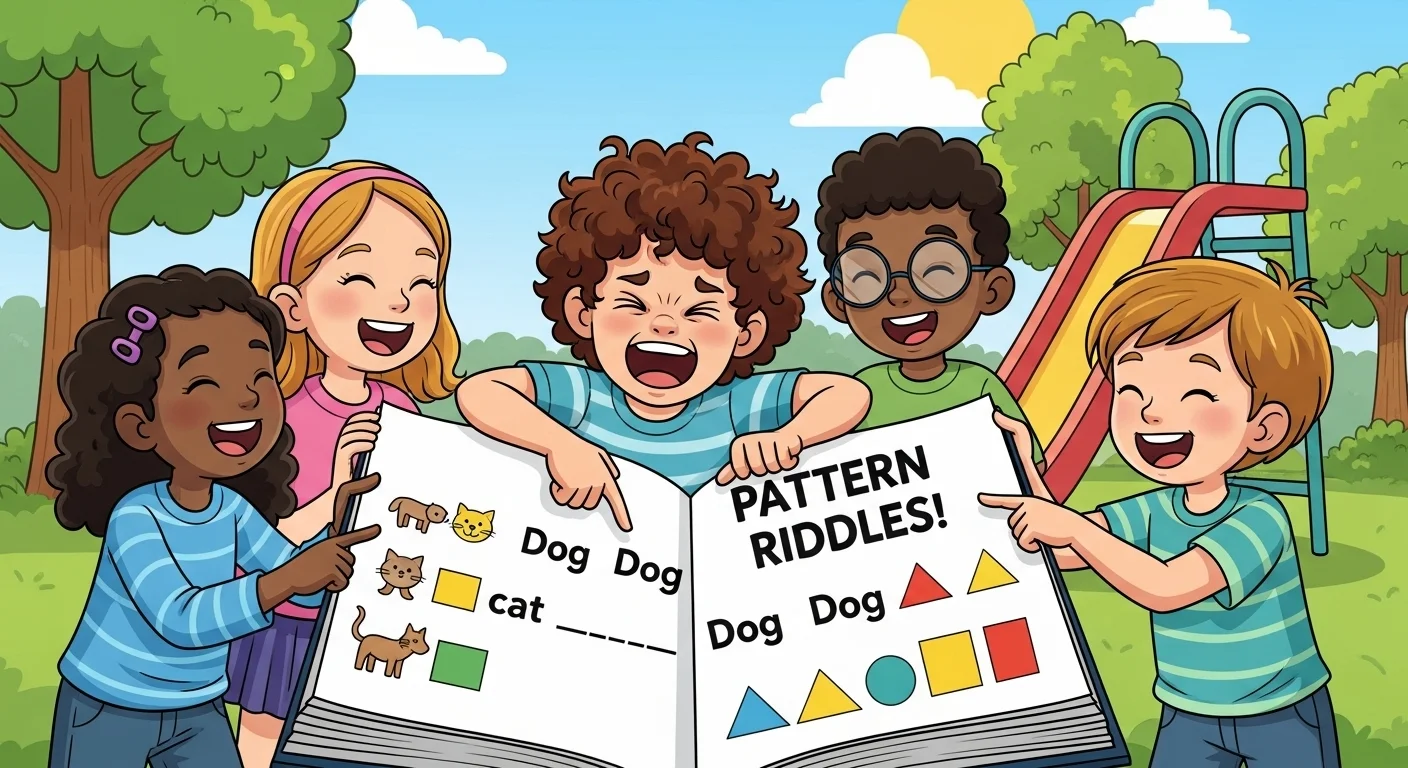
Cat dog cat dog what comes next 👉 cat
Clap tap clap tap what comes next 👉 clap
Up down up down what comes next 👉 up
Sun moon sun moon what comes next 👉 sun
In out in out what comes next 👉 in
🔢 Number pattern riddles for kids Love
One two three what comes next 👉 four
Two four six what comes next 👉 eight
Five ten fifteen what comes next 👉 twenty
Ten nine eight what pattern riddles for kids comes next 👉 seven
One three five what comes next 👉 seven
Two five eight what comes next 👉 eleven
Four eight twelve what comes next 👉 sixteen
Nine seven five what comes next 👉 three
One four seven what comes next 👉 ten
Six twelve eighteen what comes next 👉 twenty four
🎨 Color Pattern Riddles for Young Minds
Red yellow red yellow what comes next 👉 red
Blue blue green blue blue green what comes next 👉 blue
Black white black white what comes next 👉 black
Green green yellow green green yellow what comes next 👉 green
Pink purple pink purple what comes next 👉 pink
Orange blue orange blue what comes next 👉 orange
Red red blue red red blue what comes next 👉 red
Yellow green yellow green what comes next 👉 yellow
Brown white brown white what comes pattern riddles for kids next 👉 brown
Blue green blue green what comes next 👉 blue
🔺 Shape Pattern Riddles Made Simple
Circle square triangle circle square what comes next 👉 triangle
Star heart star heart what comes next 👉 star
Square square circle square square circle what comes next 👉 square
Triangle circle triangle circle what comes next 👉 triangle
Oval rectangle oval rectangle what comes next 👉 oval
Circle circle square circle circle square what comes next 👉 circle
Diamond star diamond star what comes next 👉 diamond
Triangle triangle square triangle triangle square what comes next 👉 triangle
Heart circle heart circle what comes next 👉 heart
Square triangle square triangle what comes next 👉 square
👣 Action and Movement Pattern Riddles
Jump clap jump clap what comes next 👉 jump
Run walk run walk what comes next 👉 run
Hop hop step hop hop step what comes next 👉 hop
Turn spin turn spin what comes next 👉 turn
Clap clap stomp clap clap stomp what comes next 👉 clap
Skip walk skip walk what comes next 👉 skip
Up jump up jump what comes next 👉 up
Tap snap tap snap what comes next 👉 tap
Bend stretch bend stretch what comes next 👉 bend
March stop march stop what comes next 👉 march
🐾 Animal Pattern Riddles Kids Enjoy
Cat cat dog cat cat dog what comes next 👉 cat
Cow pig cow pig what comes next 👉 cow
Duck duck goose duck duck goose what comes next 👉 duck
Lion tiger lion tiger what comes next 👉 lion
Bird bird bird cat bird bird bird cat what comes next 👉 bird
Fish frog fish frog what comes next 👉 fish
Horse cow horse cow what comes next 👉 horse
Bee ant bee ant what comes next 👉 bee
Panda panda bear panda panda bear pattern riddles for kids what comes next 👉 panda
Owl bat owl bat what comes next 👉 owl
🧠 Logic Pattern Riddles for Smart Thinkers
One apple two apples one apple two apples what comes next 👉 one apple
Big circle small square big circle small square what comes next 👉 big circle
Loud soft loud soft what comes next 👉 loud
Long short long short what comes next 👉 long
Fast slow fast slow what comes next 👉 fast
Open close open close what comes next 👉 open
Tall short tall short what comes next 👉 tall
Happy sad happy sad what comes next 👉 happy
Full empty full empty what comes next 👉 full
Clean dirty clean dirty what comes next 👉 clean
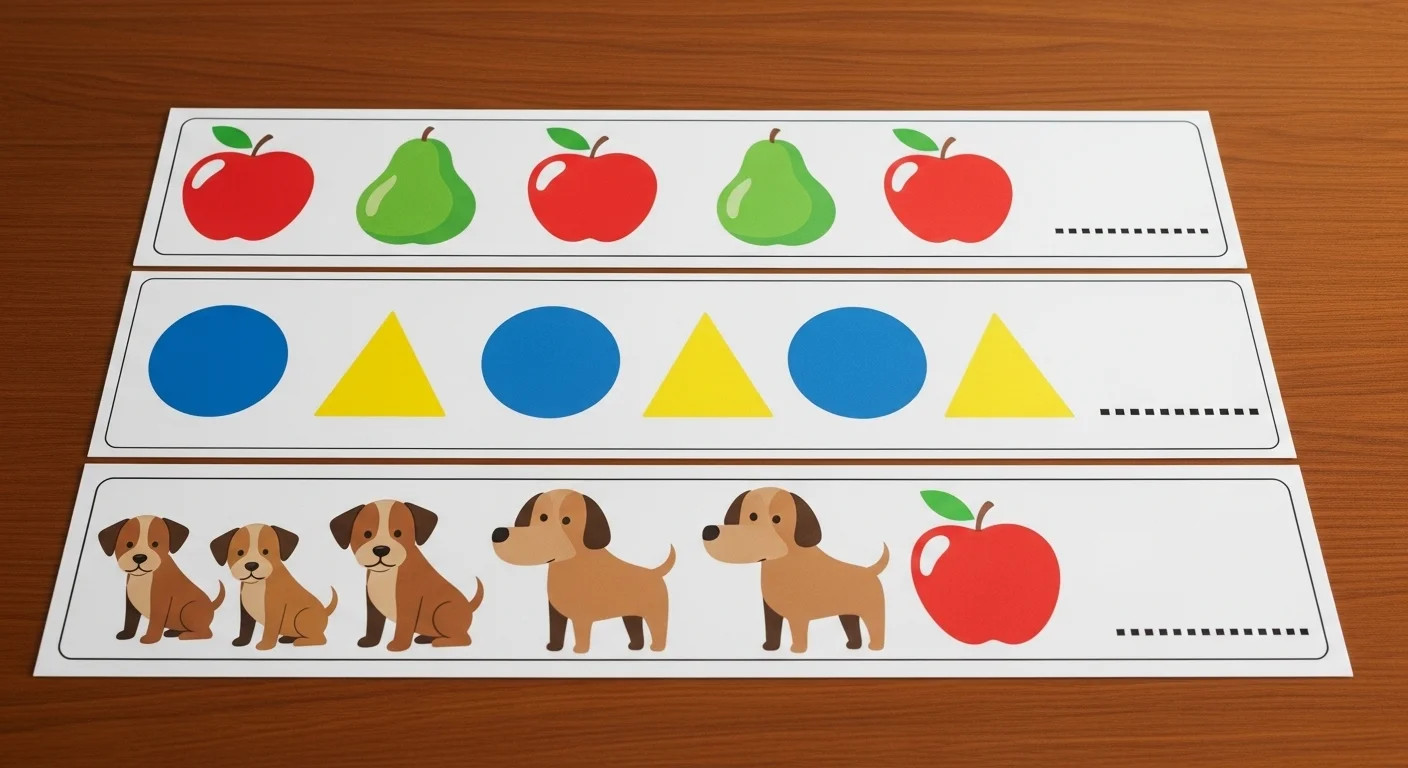
🎒 Classroom-Friendly pattern riddles for kids
Pencil book pencil book what comes next 👉 pencil
Desk chair desk chair what comes next 👉 desk
Bell ring bell ring what comes next 👉 bell
Read write read write what comes next 👉 read
Sit stand sit stand what comes next 👉 sit
Math art math art what comes next 👉 math
Open close open close what comes next 👉 open
Line dot line dot pattern riddles for kids what comes next 👉 line
Board chalk board chalk what comes pattern riddles for kids next 👉 board
In out in out what comes next 👉 in